


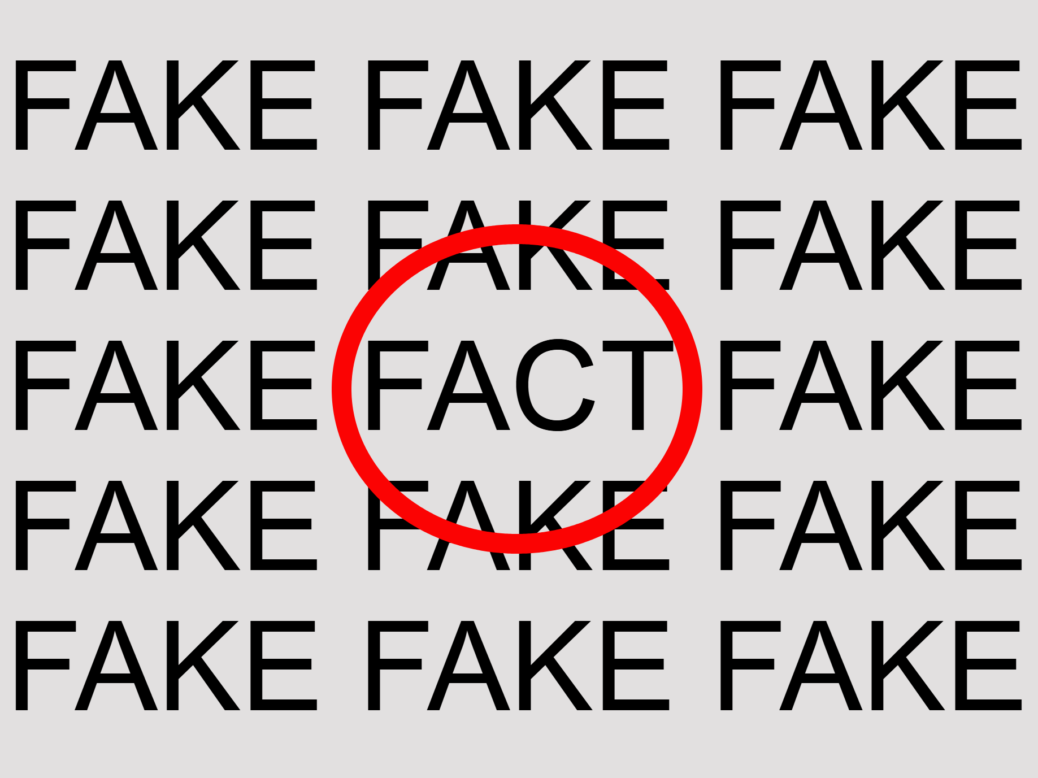
News publishers will have the monopoly on trust when deepfakes means people can no longer believe what they see and hear online, a PR tech boss and former BBC journalist has said.
Omar Hamdi, founder and CEO of Pathos Communications, said publishers are a safe bet in the world that AI is creating, labelling the technology an “accidental foe, but an inevitable friend” to the news media industry, which will reap the rewards of trustworthy content through its journalism.
“There will come a point when there is a very believable deepfake of someone, or something, that causes real harm,” said Hamdi. “After that event, people won’t worry about paying a monthly subscription to a trusted news source.”
He said that while AI is currently putting “a lot of pressure on publishers”, it was also inadvertently “highlighting that these are the only people you can trust”, predicting short-term pain for publishers before medium- to long-term gain.
“When AI talks so confidently about stuff, it’s because [what it’s referencing] is in the news,” said Hamdi. “You’ve got these multi-trillion-dollar start-ups in Silicon Valley, and actually their whole business model is an advert for the local paper.”
Publishers have been cutting deals with Google over AI, but are facing a hard bargain with Meta, owner of Facebook and Instagram, as it forces publishers to either allow AI content scraping or leave its platforms.
In response to the AI threat from tech firms, publishers have formed the Standards for Publisher Usage Rights (SPUR) coalition, with some 40 members, including the New York Times, ITV News, and The Economist.
LLMs still need to ask journalists ‘what the truth is’
For Hamdi, the large language models (LLMs) on which generative AIs are built did not “set out to ruin the traffic” of digital publishers, and the fact they might now be eating publishers’ lunch isn’t anything personal, it’s just about data.
“But now the promise that these LLMs have sold to the world… and a lot of people have bought, is ‘we know the truth’. And what they’ve realised is that they don’t know the truth; they need to ask the truth-tellers, they need to ask the journalists what the truth is and package it up for their audiences.
“There’s a beautiful dependency there, and it’s much broader than doing a licensing deal with OpenAI – culturally the way people think is going to change.”
A number of companies are competing for AI supremacy as the technology continues to evolve, with OpenAI’s ChatGPT, Google’s Gemini, Anthropic’s Claude, xAI’s Grok, Microsoft’s Co-Pilot, and Perplexity AI’s Perplexity all in the race.
Hamdi, who has written for national newspapers and worked as a presenter on the BAFTA-winning BBC Wales consumer investigations programme X-Ray, a Welsh equivalent to Watchdog, said he believed that in the long-term, the “smartest investment is [in] news publishers”.
Tech billionaires buying publishers shows trust is an asset
He pointed to tech billionaires such as Amazon founder Jeff Bezos buying the Washington Post, and Salesforce founder Marc Benioff buying Time magazine, and, more recently, OpenAI acquiring daily tech podcast TBPN (Technology Business Programming Network).
“They know what matters,” said Hamdi. “Bezos is the definition of a digital tech entrepreneur, he knows what the future is going to be. He knows the value of that asset, and he’s not doing it because he needs the cash flow.”
His comments come after Press Gazette exposed some concerning industry practice involving PR companies guaranteeing their clients paid placements and using fake websites, something Hamdi has roundly condemned within his industry.
Pathos aims to provide PR for clients, including SMBs, who don’t have the budget for a PR team, offering a pay-on-results approach, akin to a ‘no win, no fee’ lawyer. Its clients are also able to reuse excerpts from published articles in their marketing materials as part of a licensing deal.
The communications firm uses technology and human expertise to match its clients, and their stories, with suitable editorial publications – much as a freelance journalist might pitch a story – but does not guarantee coverage. It helps bridge a gap that has perhaps widened with the decline of local and regional newsbrands and sweeping cuts to journalists.
SMBs need ‘legitimate path to media’ access
While Pathos aims to fulfil this need, Hamdi said there was a “whole plethora of businesses [who] felt there was no legitimate path to the media”, giving disreputable agencies a window of opportunity. “Create more legitimate paths, take the market away from the bad guys, the market should be run by the good guys – that’s the only solution,” he said.
Hamdi said PR agencies should “tell clients the truth” and manage their expectations around coverage – “if something’s impossible, tell them it’s impossible” – and that a good question to ask of a business you’re unsure about is “who are the people behind it?”.
“If [someone’s] not willing to put their face on something, what does that tell you about the thing? And there are actually lots of businesses that [do] exactly that,” he said.
“I think the most important thing is being transparent and being open and being clear about what you’re doing. That applies to everyone in the [media] ecosystem: publishers, PR firms… and that’s what creates a strong media, that openness and that transparency.”
Email pged@pressgazette.co.uk to point out mistakes, provide story tips or send in a letter for publication on our "Letters Page" blog
